Nuisance ant and perimeter chemical interruption halts biological infiltration at the structural envelope. In regions characterized by sandy-loam soils and humid subtropical microclimates, outdoor colonies of Argentine…
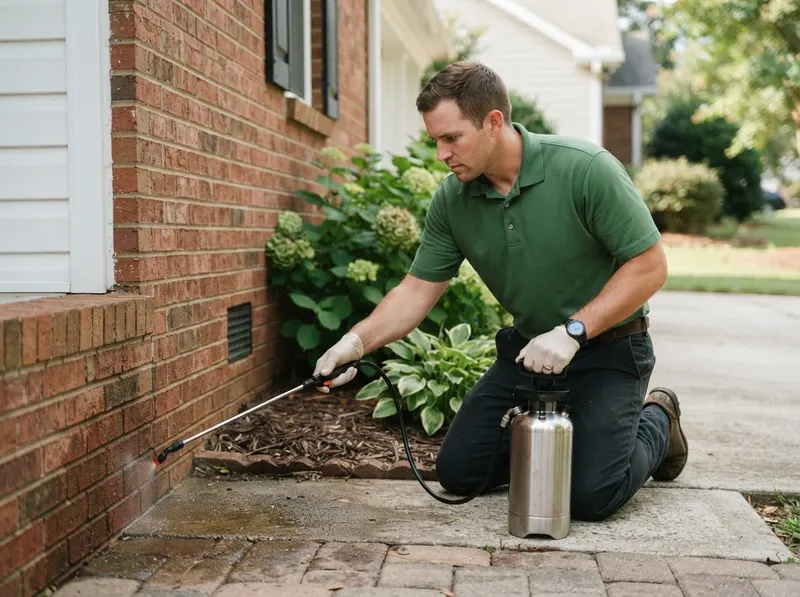
Nuisance ant and perimeter chemical interruption halts biological infiltration at the structural envelope. In regions characterized by sandy-loam soils and humid subtropical microclimates, outdoor colonies of Argentine ants and odorous house ants seek interior humidity sources once outdoor temperatures surpass 85°F. Conventional retail pyrethroid sprays act as spatial repellents; when applied to baseboards, they trigger horizontal colony budding, causing multi-queen species to splinter into isolated satellite nests inside wall voids. Perimeter chemical interruption relies instead on non-repellent, slow-acting transfer chemistries regulated under the Federal Insecticide, Fungicide, and Rodenticide Act. Scouting workers traverse an imperceptible liquid barrier applied directly against masonry and foundation stem walls, carrying the active ingredient back into the primary subterranean brood chamber through social food exchange (trophallaxis).
Residual barriers are calibrated to the structural substrate. Historic raised brick piers and ventilated crawlspaces in neighborhoods such as Earlewood, Elmwood Park, Cottontown, and Shandon present significant perimeter expansion gaps where moisture gathers in shaded understories. Here, technician teams apply water-resistant micro-encapsulated formulations rated by the Clemson University Department of Pesticide Regulation, pairing perimeter interruption with structural weep-hole mesh screens. In slab-on-grade architecture throughout Forest Acres, Lake Katherine, Heathwood, and Rosewood, low-growing ivy beds and pinestraw mulch maintain continuous soil moisture that shields ant runways. Technicians mechanically sweep mulch back 12 inches from the slab face before laying down dry, moisture-resistant matrix granular baits specified by the Mississippi State University Extension Service for selective foraging uptake.
Perimeter interruption fits situations where foraging trails enter along outer siding, brick ledges, or porch slabs without established interior sub-floor nests. The operational trade-off is mechanical patience: non-repellent chemistries do not kill on immediate contact, requiring 3 to 10 days to achieve full biological knock-down of subterranean queens, avoiding the chemical trap of repetitive interior aerosols. To maintain continuous interruption, property owners should keep branch canopies trimmed 24 inches off rooflines according to International Society of Arboriculture clearances and ensure downspout extensions direct precipitation 4 feet past foundation perimeters, adhering to drainage guidelines from the Natural Resources Conservation Service.
Treatments strictly prioritize household biosafety. Active liquid barriers bind directly to structural surfaces and dry within 60 to 90 minutes. Pet owners and parents can maintain normal exterior yard usage once the formulation has completely cured. LakeForge Exterminating operates without forcing long-term recurring contracts, focusing intervention on seasonal colony pressure points across Riverfront Park corridors, The Vista, and Olympia mill districts. Technicians review application protocols outlined by the National Pest Management Association to confirm that perimeter barrier zones do not compromise nearby municipal storm runoff systems managed under South Carolina Department of Health and Environmental Control water quality standards. For specialized chemical interruption protocol inquiries or site evaluations, reach the tactical line directly at (839) 200-1113.
Every job gets a firm, written price after a free on-site visit.
Tell us about your nuisance ant and perimeter chemical interruption job in columbia and we'll send a clear, written quote, usually the same day.
 LakeForge Exterminating