Subterranean termite treatment in Columbia requires tactical precision because native sand-clay soils along the Congaree River basin foster intense subterranean colony density. Eastern subterranean termites nesting…
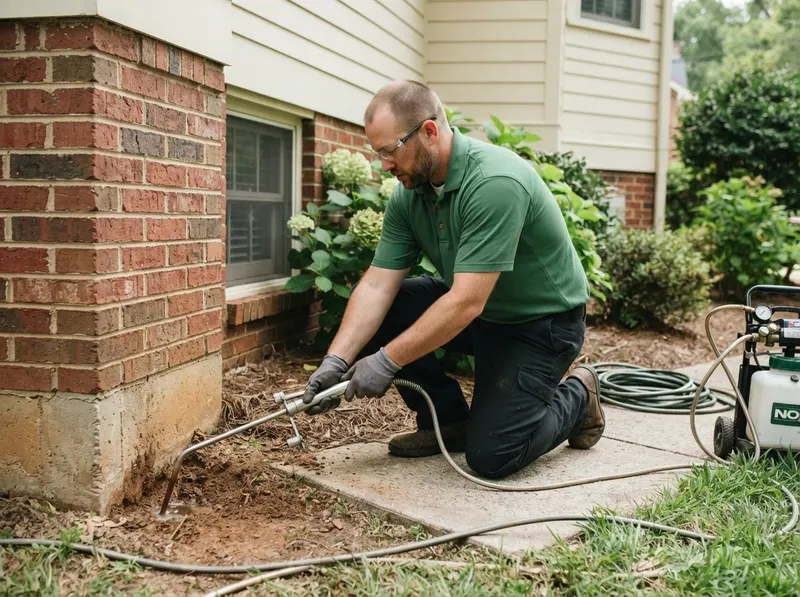
Subterranean termite treatment in Columbia requires tactical precision because native sand-clay soils along the Congaree River basin foster intense subterranean colony density. Eastern subterranean termites nesting deep below the frost line travel upward through foundation expansion joints, masonry piers, and utility penetrations to consume structural framing. In crawl-space-heavy historic homes throughout Earlewood, Shandon, and Cottontown, workers excavate a continuous 6-inch by 6-inch perimeter trench down to the footing along interior and exterior foundation walls. Soil is saturated at a rate specified by the Clemson University Department of Pesticide Regulation, establishing a treated soil zone using liquid non-repellents like Termidor NY (fipronil) that foraging workers transfer back to suppress the central nest. For concrete slab construction common across Forest Acres, Heathwood, and Lake Katherine, technicians drill vertical access ports through exterior slabs and attached patios at 12-inch intervals to inject protective chemistry beneath the floor level.
Selecting between trench-applied liquid barriers and low-impact baiting configurations depends on building architecture and yard hydrology. Continuous liquid soil treatments create an immediate lethal perimeter suitable for active infestations eating into floor joists or subfloors, backed by data from the (EPA) Environmental Protection Agency on termiticide durability. Conversely, perimeter bait monitoring systems such as the Sentricon System leverage chitin-synthesis inhibitors evaluated by the Entomological Society of America to eliminate foraging colonies over a 60-to-120-day window without invasive concrete drilling. The engineering trade-off centers on immediate barrier establishment versus zero-disturbance bait placement around properties near water tables adjacent to Columbia Canal and Riverfront Park. All non-repellent chemicals bind directly to soil minerals, presenting no air vapor hazards to indoor living areas or household pets once dried.
Environmental conditions throughout Midlands microclimates dictate annual swarm activity, often peaking between March and May following seasonal rains. In high-moisture neighborhoods like Olympia and Rosewood near the University of South Carolina Horseshoe, damp crawl spaces frequently require auxiliary moisture remediation alongside chemical injection. Homeowners seeking guidance can review moisture standards through the U.S. Department of Housing and Urban Development and pest mitigation guides from the National Pest Management Association. Structural integrity verifications adhere to building safety benchmarks outlined by the International Code Council, while environmental containment protocols reference groundwater defense rules published by the South Carolina Department of Health and Environmental Control. Soil analysis methods match soil survey classifications provided by the USDA Natural Resources Conservation Service, ensuring termiticide concentrations remain stable despite intense Midlands summer heat.
Every job gets a firm, written price after a free on-site visit.
Tell us about your subterranean termite treatment job in columbia and we'll send a clear, written quote, usually the same day.
 LakeForge Exterminating