Stinging insect activity in Richland County peaks from late spring through early autumn, driven by high humidity and long foraging seasons along the Congaree basin. Aerial paper wasps (Polistes dominula) frequently…
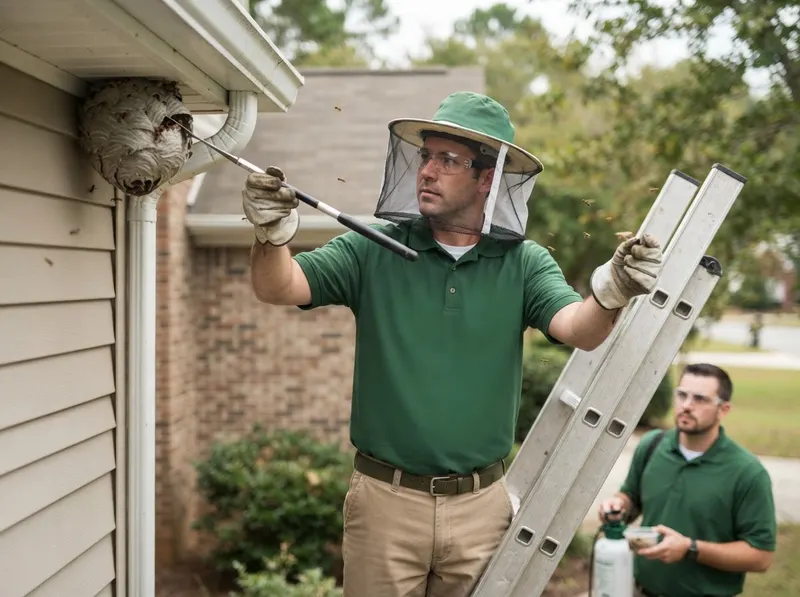
Stinging insect activity in Richland County peaks from late spring through early autumn, driven by high humidity and long foraging seasons along the Congaree basin. Aerial paper wasps (Polistes dominula) frequently construct open-comb hexagonal nests beneath porch rafters in Shandon and Rosewood, while aerial hornets establish large carton nests high in the water oaks of Heathwood and Lake Katherine. Ground-nesting yellowjackets (Vespula maculifrons) often colonize abandoned rodent burrows or settle behind historical exterior cladding in Earlewood and Cottontown. Incomplete consumer spray treatments often cause subterranean or wall-void colonies to scatter deeper into wall cavities, forcing defensive hornets through electrical outlet plates, baseboards, and HVAC returns into inhabited rooms.
Technicians determine whether a specimen is an aggressive social vespid or a beneficial, non-aggressive species by assessing nest architecture and worker morphology under guidelines established by the Clemson University Cooperative Extension Service. Honeybee swarms (Apis mellifera) require specialized live extraction rather than extermination, coordinating with local apiarists per the standards of the South Carolina State Beekeepers Association. When social vespids threaten building occupants, technicians apply precision chemical knockdowns registered by the EPA Office of Pesticide Programs directly into the central entrance, neutralizing guard workers immediately to prevent widespread alarm pheromone dispersal.
Decision-fit depends on whether colonies occupy exposed architectural margins or interior structural voids. Open-air soffit nests beneath historical fascia boards in Elmwood Park warrant targeted topical treatment followed by immediate physical scraping, broad-spectrum enzyme washing to eliminate directional pheromones, and preventative barrier application. Wall-void and soffit infestations, common in mid-century architecture around Forest Acres or modified industrial lofts in The Vista and Olympia, demand specialized mechanical access. Technicians introduce non-repellent insecticidal dusts labeled under the Clemson Department of Pesticide Regulation, followed by mechanical exclusion using galvanized mesh and silicone sealants to block access pipes, weeping mortar holes, and roofline frieze boards.
1. Technicians survey the property perimeter to locate flight corridors, identifying primary entry voids and satellite colonies across siding, eave lines, and landscaping.
2. Protective equipment meeting OSHA standards for personal protective equipment is donned to contain defense swarms during the intervention.
3. Calibrated application tools deliver targeted knockdown agents or micro-fine dust formulations directly into the primary nest chamber.
4. Complete physical extraction of the nest comb, brood, and carton occurs whenever structures allow access without compromising building framing.
5. Structural exclusion secures the exterior envelope by sealing gaps with backing rod, structural caulk, or 1/8-inch copper mesh.
Every job gets a firm, written price after a free on-site visit.
Tell us about your stinging insect hive and nest removal job in columbia and we'll send a clear, written quote, usually the same day.
 LakeForge Exterminating